



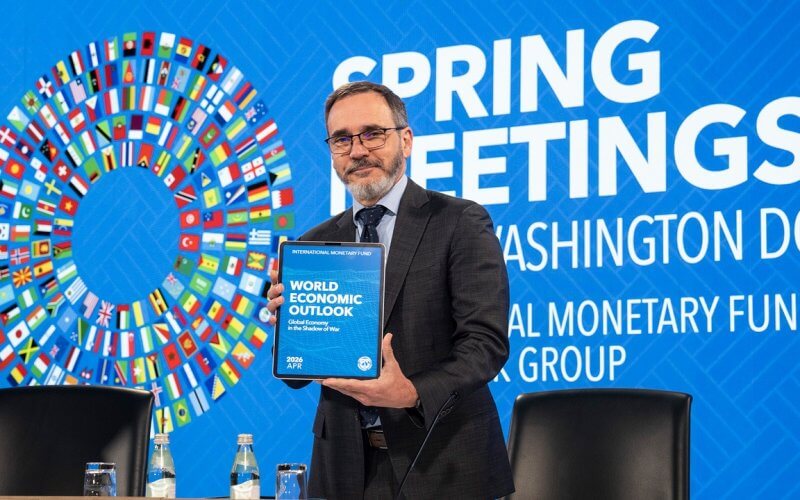
Some of the world’s most powerful economic minds gathered in Washington, D.C. from April 13 to 18 for the 2026 IMF–World Bank Spring Meetings, and while the challenges on the table were real, so was the resolve to meet them. With 191 countries represented, the message from finance ministers and central bank governors was one of coordinated determination: the global economy has weathered shocks before, and it can do so again.
IMF Managing Director Kristalina Georgieva acknowledged the weight of the moment, a Middle East conflict has disrupted energy flows and pushed up prices globally, but was clear that the institutions are prepared. In her curtain-raiser address ahead of the meetings, she said: “Our 191 member countries can count on us to support them with financing if needed. And they can count on us to bring them together to find a path forward through the fog of uncertainty.” The IMF projects global growth at 3.1 percent in 2026, with a recovery to 3.2 percent in 2027, and notably, long-term inflation expectations remain well-anchored, a sign that confidence in the global economy’s foundations has not been shaken.
IMF Chief Economist Pierre-Olivier Gourinchas pointed to the upside as clearly as the risks. A swift resolution of the conflict, he noted, combined with productivity gains from faster AI adoption and easing trade tensions, “could uplift the global economy” significantly. AI in particular emerged as a genuine bright spot across the week’s conversations, with policymakers and private sector leaders discussing how it is already reshaping growth prospects, improving state capacity, and creating new opportunities across both advanced and emerging economies.
The meetings also shone a spotlight on inclusion. A dedicated session on unlocking women’s economic participation explored how expanding social protection, digital access, and capital can drive meaningful job creation globally, a reminder that even in difficult times, the agenda for long-term, shared prosperity continues to move forward.
The overall tone from Washington was not despair but pragmatism with purpose. The world’s finance leaders left with a shared commitment: protect the most vulnerable, invest in resilience, and keep building toward a more stable global economy, together.
Sources
IMF Spring Meeting, April 2026
IMF – Global Economy in the Shadow of War,April 2026
Atlantic Council – Inside the IMF-World Bank Spring Meetings as leaders grapple with war and supply shocks, 2026
World Bank Live – Unlocking Women’s Economic Power