



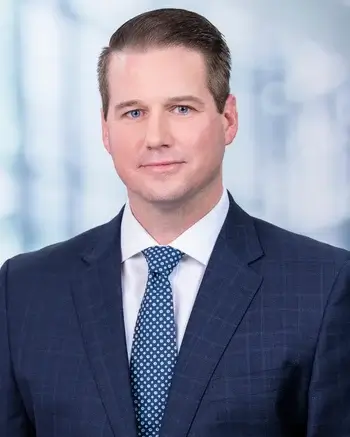
As the world races to decarbonise without dimming the lights, one technology long left in the wings has stepped back into the spotlight, and one executive is stage-managing its return. Dan Sumner, the newly confirmed President and CEO of Westinghouse Electric Company, is now the public face of an industrial reawakening that links climate ambition, AI-driven power demand, and geopolitical strategy in a single, audacious play.
On 27 April 2026, Westinghouse formally appointed Dan Sumner as President and Chief Executive Officer, ending a twelve-month interim mandate during which the company secured one of the most consequential industrial agreements of the decade. With nearly 25 years of global experience, including a tenure as Chief Financial Officer between 2017 and 2023 and leadership of the company’s Global Operating Plant business, Sumner inherits the top job at a moment when nuclear energy is no longer a contested afterthought but a central pillar of the energy transition.
An $80 Billion Mandate
The defining moment of Sumner’s interim tenure was the October 2025 strategic partnership between the U.S. Government, Westinghouse, Brookfield Asset Management and Cameco, a programme to construct at least $80 billion of new reactors across the United States using Westinghouse’s AP1000® and AP300™ technologies.
The deal, announced by President Donald Trump from Tokyo and underwritten in part by Japanese capital, hands the U.S. Government a 20% participation interest above defined thresholds and is projected to support more than 100,000 construction jobs, with each two-unit AP1000 plant sustaining roughly 45,000 manufacturing and engineering jobs across 43 states. For Sumner, who quietly told a Pittsburgh roundtable in July 2025 that ten new large reactors would begin construction by 2030, the agreement is a vindication and an obligation in equal measure.
Reactors Reimagined for a Low-Carbon Grid
Westinghouse’s technological proposition under Sumner is two-tiered. The flagship AP1000, a Generation III+ pressurised water reactor with fully passive safety systems, the smallest footprint per megawatt on the market and a U.S. design certification recently extended to 2046, anchors gigawatt-scale deployment. Complementing it is the AP300™ Small Modular Reactor, a 300 MWe single-loop derivative engineered for grid flexibility, district heating, desalination and clean hydrogen production. Together, the pair are designed to dovetail with renewables rather than displace them, providing the firm baseload that intermittent solar and wind cannot.
Global Footprint, Geopolitical Heft
Sumner takes the helm of a company whose technology already underpins roughly half of the world’s operating nuclear fleet. AP1000 reactors are setting performance records at China’s Sanmen and Haiyang sites and at Georgia’s Plant Vogtle; fourteen further units are under construction worldwide; and the technology has been selected by Poland, Ukraine and Bulgaria, with active discussions in Slovakia, the Czech Republic, Slovenia, Finland, Sweden, Canada and the United Kingdom. The strategic logic is unmistakable, exporting Western reactor technology is now as much an instrument of allied energy security as it is a commercial enterprise.
Powering the AI Era
Perhaps the most decisive tailwind behind Sumner’s plan is artificial intelligence. Hyperscale data centres are projected to consume electricity at a rate that renewables alone cannot reliably match, and Westinghouse has positioned its reactors, coupled with AI-driven construction tools the company says will make builds faster and more repeatable, as the answer. The competitive field is crowded with newer SMR challengers, but Sumner’s pitch rests on a hard-edged advantage: AP technology is licensed, operating and proven, while most rivals remain on the drawing board.
The Quiet Architect
Sumner is not a showman, and his ascent has been deliberate rather than dramatic. Yet under his interim watch, Westinghouse moved from a post-bankruptcy turnaround story to the centre of a transatlantic industrial strategy. “I am proud of Westinghouse’s storied history,” he said on his appointment, “but even more excited about the bright future that lies ahead for our company and industry.” If the reactors break ground on schedule, that future will be measured not just in megawatts, but in the credibility of the global energy transition itself.
Sources: Westinghouse Electric Company, Cameco Corporation, Brookfield Asset Management, U.S. Department of Energy, U.S. Department of Commerce, Power Magazine, Engineering News-Record, World Nuclear News, Nuclear Engineering International, Wood Mackenzie, K&L Gates, PricewaterhouseCoopers, and the U.S. Securities and Exchange Commission.