


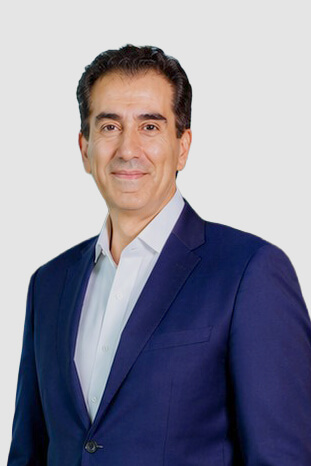
KPMG Middle East has announced the appointment of Islam Ahmad Al Bayaa as Chief Executive Officer, effective 1 October 2026. He succeeds Dr. Abdullah Al Fozan, who will complete his current term on 30 September 2026 and continue to lead the firm through the transition.
The appointment follows a rigorous and independent selection process led by the firm’s governance bodies, supported by external advisors, and concluded through a partner vote.
Al Bayaa currently serves as Head of Advisory for KPMG Middle East, where he oversees more than 2,400 professionals and 100 partners across the region. His career spans over 30 years across deal advisory, mergers and acquisitions, valuations, corporate strategy, and business transformation, with leadership roles at KPMG across the UK, Saudi Arabia, and the Middle East, as well as Citigroup, Hawkpoint, and The Kessler Group. He holds a Master’s in Mathematics from the University of Cambridge and a Master’s in Finance from London Business School, and is an ACA-qualified chartered accountant in England and Wales.
He has been a member of KPMG Middle East’s Executive Committee for the past 13 years, during which he has built deep relationships with governments, sovereign entities, and major institutional clients across the region, leading cross-border growth, market integration, and large-scale transformation initiatives. His work has increasingly focused on AI and innovation in advisory, graduate talent development, and the economic transformation of Saudi Arabia and the broader GCC.
Commenting on the appointment, Dr. Abdullah Al Fozan said the decision reflected the strength of the firm’s leadership pipeline and the confidence its partners have in the firm’s direction. He noted that Al Bayaa had been instrumental in driving the growth of KPMG Middle East’s advisory business and enhancing its presence across key markets in the region.
Al Bayaa said KPMG Middle East had built a strong foundation for growth, supported by a clear strategy, a diverse client base, and exceptional talent. He expressed his intention to work closely with partners, colleagues, and clients to strengthen the firm’s culture and market position while delivering long-term value.
The leadership transition reflects KPMG Middle East’s ongoing commitment to strong governance, regional collaboration, and sustainable growth as the firm continues to evolve its operating model to meet the demands of a rapidly changing business environment.