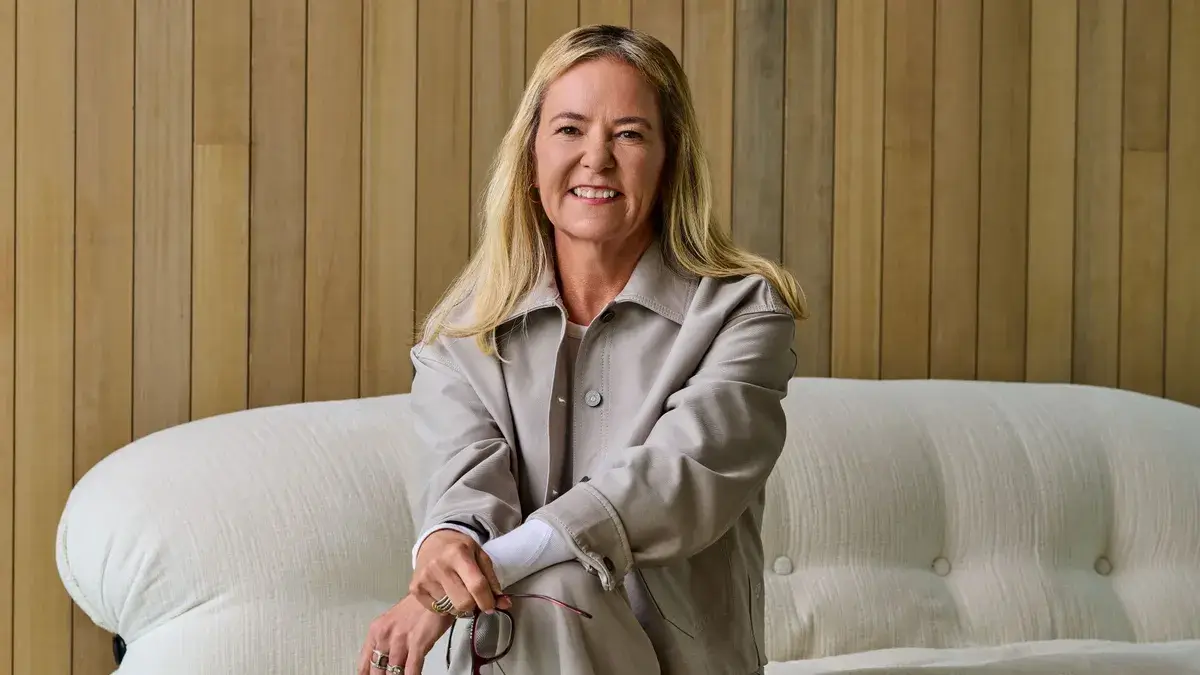
The woman who helped grow Nike fivefold over 26 years is stepping into Lululemon’s corner office at a moment that feels almost scripted: a $11 billion athleisure giant in need of reinvention, and a female-led brand finally getting a woman at the helm. But as Wall Street weighs scepticism against symbolism, the question is whether Heidi O’Neill’s Nike playbook can rewrite Lululemon’s next decade, or whether the brand needs a chapter she has yet to write.
A FAMILIAR STARTING LINE
When Heidi O’Neill joined Nike in 1998, the company was a $9 billion business. By the time she stepped down as President of Consumer, Product and Brand in 2025, that number had climbed to $45 billion. Over 26 years, she helped Nike build, scale, and globalise its product engine, leading its women’s business, accelerating Nike Direct, overseeing four geographic operating regions, and ultimately running the integration of global Men’s, Women’s, and Kids consumer teams alongside global brand marketing.
On April 22, 2026, Lululemon Athletica announced O’Neill as its next Chief Executive Officer, effective September 8, 2026. She succeeds Calvin McDonald, whose departure was announced late last year. And in a quiet act of historical symmetry, she will be inheriting a company whose current revenue, roughly $11 billion, sits almost exactly where Nike’s did the day she walked into Beaverton.
The parallel is not lost on Lululemon’s board.
“Heidi is an inspiring leader and proven, consumer-driven brand strategist, with a rare ability to both imagine a new future for a brand and to create the structure and processes to deliver on that vision.”
— Marti Morfitt, Executive Chair of the Board, Lululemon
THE PLAYBOOK THAT BUILT AN EMPIRE
O’Neill’s years at Nike were not built on a single masterstroke, but on the patient assembly of a global growth engine. She was instrumental in building Nike’s women’s business into a category in its own right, long before the rest of the industry treated women’s active apparel as anything more than a sub-segment. She led the marketplace operations across four geographies, ran Nike Direct during its most aggressive digital-commerce expansion, and ultimately oversaw the integration of consumer, product, and brand functions across the entire enterprise.
Her board appointments, Spotify and Hyatt Hotels, reflect a leader who has long thought beyond a single category, understanding the architecture of consumer brands at scale. For Lululemon, a company that has begun to plateau in the United States and is searching for its next narrative, this resume is precisely the institutional knowledge the board went looking for.
A BRAND AT A CROSSROADS
Lululemon’s problem is not relevance, it is reinvention. The brand that pioneered the athleisure category now finds itself surrounded by imitators, with executives publicly acknowledging that the company failed to keep pace with trends and to deepen customer loyalty in its largest market. U.S. growth has slowed. Founder Chip Wilson has been vocal in his criticism of the board, even launching a proxy fight to reshape its composition. Into this charged moment walks O’Neill, with a mandate to reawaken the brand without dismantling what made it iconic in the first place.
She has acknowledged as much in her first message to employees, recognising that Lululemon “has built something special” and that her opportunity lies at the intersection of “extraordinary product, design and community.” It is a measured opening note, the language of a leader who knows that her first task is not to impose, but to listen.
THE SCEPTICS AND THE SYMBOLISM
Wall Street’s reception has been cautious. Needham analysts called the appointment “intriguing.” BNP Paribas Equity Research expressed disappointment. William Blair’s team labelled the choice “out-of-left-field.” Even Chip Wilson, the brand’s founder, publicly questioned whether a near-thirty-year Nike veteran could embody the “transformative, creative-first leadership” he believes Lululemon now requires.
And yet, the symbolism is undeniable. Lululemon is a brand whose customer base, product story, and cultural identity have always been profoundly female-led. The fact that it took until 2026 to appoint its first woman CEO is a quiet indictment of the wider industry, and a signal that the next decade of consumer leadership will look different from the last.
CAN THE NIKE PLAYBOOK BE RUN AGAIN ?
The harder question is the strategic one. Nike’s scaling story was built on category creation, geographic expansion, women’s leadership, and the digital-direct revolution, each of which Lululemon has, in its own way, already attempted. The growth runway that lay ahead of Nike in 1998 is not the runway that lies ahead of Lululemon today. Repeating the playbook will not be enough. Adapting it sharply, locally, and with a deeper understanding of the cultural fatigue that surrounds the athleisure category, is the real test.
What O’Neill brings, more than any single playbook, is institutional patience. Few leaders today have seen a brand grow fivefold from the inside. Few have integrated product, brand, and consumer functions at the scale she has. And few will inherit a company so philosophically aligned with their own career: built around women, defined by community, and shaped by product.
Whether Heidi O’Neill can take Lululemon from $11 billion to its own version of $45 billion is the question that will define her tenure. The answer will not come in the first quarter, or even the first year. But on September 8, 2026, the experiment formally begins, and the world of global consumer leadership will be watching.
Sources: Lululemon Athletica Inc., Nike Inc., CNBC, The Globe and Mail, Women’s Wear Daily (WWD), Retail Dive, Fortune, and Needham, BNP Paribas, and William Blair analyst notes.