


Something is shifting at America’s graduation podiums.
When former Google CEO Eric Schmidt took the stage at the University of Arizona earlier this month and told graduates they would “help shape artificial intelligence,” he was met not with applause but with boos.
Days later at Middle Tennessee State University, Big Machine Records CEO Scott Borchetta received a similar reception after speaking about AI’s growing influence on music. A pattern is emerging: the AI generation is no longer prepared to receive optimism from technology’s top executives without challenge.
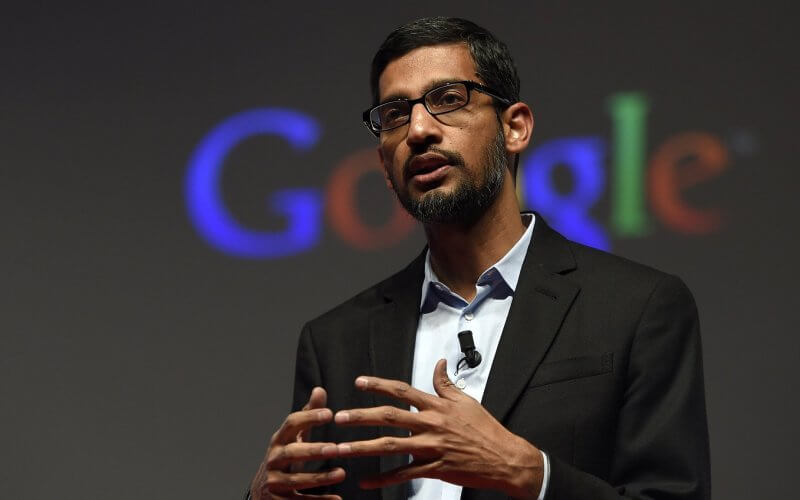
Into that simmering moment has stepped one of the world’s most influential, and historically most measured, technology leaders: Sundar Pichai, CEO of Google and Alphabet.
A New Leadership Test
Pichai is preparing to deliver the commencement address at Stanford University next month. Asked by hosts of the Hard Fork podcast what his “boo strategy” would be, Pichai did not deflect, joke, or retreat into corporate talking points. He acknowledged the moment for what it is.
“Humans aren’t evolved to process that much change.”
— Sundar Pichai, CEO, Google and Alphabet
That single line, now circulating widely across LinkedIn, X, and global business media, captures something rare in modern technology leadership: a chief executive validating the very concerns most of his industry has spent years dismissing.
Optimism, But Without the Spin
Pichai went further. He acknowledged that public concern about AI is “rightfully” growing, and that this generation of graduates is stepping into a workforce being reshaped in real time. The unemployment rate among young degree-holders in the United States is rising. Entry-level opportunities are shrinking. Major corporations including Microsoft, Meta, Salesforce, and Google itself have referenced AI automation in announcing layoffs through 2026.
And yet, Pichai remained unmistakably optimistic.
“I’m extraordinarily optimistic about the next generation. They are actually both going to be a big part of driving that progress and also dealing with the impact.”
It is a careful but powerful framing. He is not telling graduates that AI will not disrupt their careers. He is telling them they will not simply be passengers in that disruption, they will be its architects.
Why the Pichai Response Matters
For years, technology leaders have approached questions about AI’s social impact with two predictable strategies: defensive optimism or technocratic deflection. Pichai’s response represents a third path, one rooted in candour.
It is the kind of leadership signal global business has been quietly waiting for. In an industry whose loudest voices increasingly traffic in maximalist predictions and tribal alignment, Pichai’s reply is grounded, human, and self-aware. He is not promising that the future will be easy. He is promising that the next generation will be part of building it.
That distinction matters, and it explains why his comments have travelled so far so fast.
The Stanford Stage Awaits
Pichai will take the Stanford commencement stage at one of the most charged moments in the history of technology leadership. He follows in the footsteps of executives who have been heckled, contested, and publicly questioned by an audience that is no longer willing to accept corporate AI optimism at face value.
But Pichai is not Eric Schmidt. He is not Scott Borchetta. And his measured public posture over the past decade suggests he will not simply walk on stage and read from the standard tech-CEO playbook.
If his Hard Fork remarks are any indication, what graduates will hear at Stanford will be neither a sales pitch nor an apology. It will be something more honest, and quite possibly, more useful: an acknowledgement that the future is unsettled, paired with the conviction that the people in the room have a meaningful role in shaping it.
In a year defined by anxiety, Pichai’s stance offers something rarer than optimism. It offers respect.
And in 2026, that may be the only leadership message the AI generation is willing to hear.
Sources: Hard Fork podcast (The New York Times), Business Insider, American Bazaar, Storyboard18, Breitbart News, Shopifreaks.