- Langham Hospitality Group Names Josh Littman to Lead EMEA Development Push
- BREGO Life Sciences Founder Dr. Danny Wong on Leadership, Innovation and Growth in Healthcare
- Where Precision Builds Landmarks: The Luxe Developers
- Building a Profitable Business Without Sacrificing Your Life
- Sundar Pichai’s “Boo Strategy”: How Google’s CEO Plans to Face the AI Generation




Bangladesh
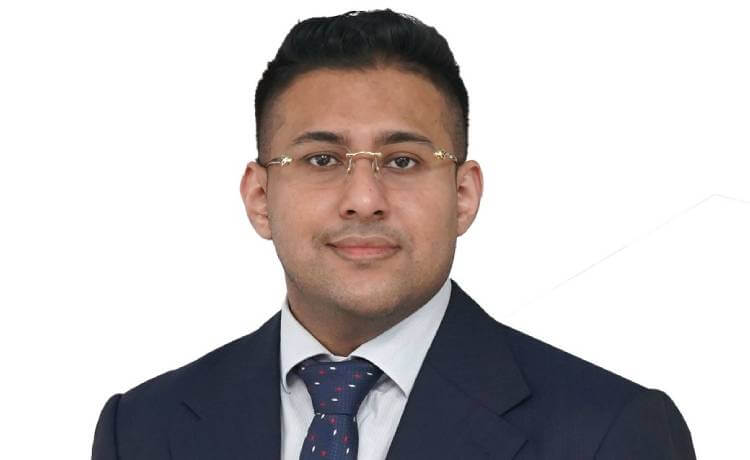
Sakif Shamim, Managing Director of Labaid Cancer Hospital & Super Speciality Centre and Deputy Managing Director of Labaid Group, believes that in volatile markets leadership is measured not by speed, but by structural strength. His focus is on building institutions designed to endure beyond growth cycles, political shifts, and individual tenures.
Q. Your leadership philosophy centers on permanence rather than momentum. Was there a defining experience early in your career that shaped this perspective?
Every leader is shaped by moments that reveal the difference between growth and stability. Early in my career, I observed how institutions can expand rapidly yet struggle when systems are not mature enough to support that expansion. That experience reinforced a simple but lasting lesson for me: scale without structure creates vulnerability.
Over time, I realized that sustainable leadership is less about achieving milestones and more about strengthening foundations. Titles change, markets fluctuate, and economic cycles shift. What remains is the institution. That understanding shaped the way I approach every major decision.
Q. In many emerging markets, rapid expansion is often seen as proof of progress. Why do you believe growth alone can be misleading, especially in healthcare?
Expansion is exciting because it is visible. You can see buildings rise, numbers grow, services multiply. It gives the impression of strength. But structure is quieter. It determines whether that growth can withstand pressure, survive leadership transition, and continue delivering value long after the initial momentum fades.
In high-growth economies, capital often flows quickly and demand accelerates faster than systems mature. It is possible to expand infrastructure without strengthening governance, or to adopt advanced technology without ensuring workforce readiness. When that happens, growth creates fragility rather than resilience. Leadership must look beyond what is immediately visible and focus on what sustains the institution over time.
Sustainable success is not measured only by how far you scale, but by whether the organization remains coherent, compliant, and financially disciplined through volatility. That is where structure becomes decisive. Institutions that neglect this foundation may grow rapidly, but they struggle when conditions shift. True leadership anticipates that shift.
“Expansion is visible and often celebrated,
but structure is what determines whether an institution
can withstand pressure, transition, and volatility”
Q. As Managing Director of Labaid Cancer Hospital & Super Speciality Centre and Deputy Managing Director of Labaid Group, how does this philosophy translate into the way you shape institutional evolution across multiple healthcare verticals?
Under my leadership, Labaid has worked to position itself not simply as a treatment provider, but as a structured institution built on clinical depth, operational discipline, and long-term planning. As part of Labaid Group, which spans pharmaceuticals, diagnostics, and healthcare education, my responsibility extends beyond hospital oversight into institutional design across interconnected verticals.
Healthcare is uniquely complex. It sits at the intersection of regulation, capital allocation, public trust, workforce capability, and technological transformation. Each of these variables evolves at a different pace in emerging markets. Our task has been to ensure that expansion across oncology and super-specialty services is supported by governance systems strong enough to maintain quality and accountability.
Institutional design requires thinking beyond immediate performance indicators. It means strengthening management layers, refining compliance processes, and embedding financial oversight into strategic decision-making. It also means cultivating leadership capacity within the organization so that authority is distributed and institutional knowledge is preserved. The goal is not just to grow, but to mature.
Q. You frequently speak about alignment between capital, governance, talent, and infrastructure. From a strategic standpoint, what does achieving that alignment demand from senior leadership teams?
Emerging markets do not lack ambition. They often move very quickly. The challenge is synchronization. Capital may move faster than governance. Technology may advance faster than workforce training. Demand may rise faster than infrastructure capacity.
Alignment requires discipline at the highest levels of decision-making. It requires executives to resist the pressure of short-term optics and instead ask whether internal systems are capable of absorbing additional scale. It means evaluating whether leadership pipelines are prepared for expanded responsibility, whether compliance systems can manage increased complexity, and whether financial planning anticipates stress scenarios.
This is not about slowing growth. It is about sequencing growth. When alignment is achieved, expansion reinforces institutional strength. When alignment is absent, expansion exposes structural weaknesses. Senior leadership must therefore prioritize coherence over speed.
Q. Governance appears central to your leadership model. For global investors and multinational partners evaluating opportunities in emerging markets, what signals indicate governance maturity?
In healthcare, there is very little margin for strategic error. If you misjudge capital deployment in retail or technology, the consequences may be financial. In healthcare, the consequences can be human. That reality demands discipline and foresight at every level.
Governance maturity signals predictability. It demonstrates that oversight evolves alongside complexity. It shows that decision-making is transparent and that accountability is institutional rather than personal. Mature governance ensures that risk management is proactive and that compliance is embedded into operations.
For global investors, governance maturity reduces uncertainty. It suggests that expansion is supported by structure and that leadership transitions will not destabilize the institution. In emerging markets, that level of predictability is increasingly valuable.
Q. In markets where founder-led models are common, how do you institutionalize leadership so that continuity is preserved beyond individual tenure?
If an institution depends entirely on one person, it carries risk. Leadership should distribute strength, not concentrate it. My responsibility is to design systems that function effectively regardless of who occupies the office.
Institutional continuity depends on depth. That depth must exist within management, within operational processes, and within culture. Succession planning cannot be symbolic. It must be structured. Decision-making authority must be layered in ways that prevent concentration of risk.
Institutions that rely heavily on individual charisma often struggle with transition. Institutions that rely on systems are more resilient. My focus has always been to ensure that leadership strength is embedded within the organization itself, not tied to a single individual.
“Leadership is not about being indispensable.
It is about designing systems strong enough to function without you”
Q. You describe healthcare as strategic infrastructure rather than merely a service industry. How does that perspective reshape the way business leaders should evaluate the sector?
When a country builds strong healthcare capacity domestically, it does more than treat patients. It retains capital that would otherwise leave the country. It develops specialized talent. It strengthens pharmaceutical production. It builds public trust in institutions.
Healthcare influences economic resilience in profound ways. In many developing economies, outbound medical travel represents significant capital outflow. Pharmaceutical dependency exposes vulnerabilities in supply chains. Talent migration weakens institutional depth.
A strong healthcare ecosystem mitigates these vulnerabilities. It anchors capital domestically and strengthens national capability. For business leaders, this means healthcare should be viewed as a core component of economic strategy rather than a peripheral social service. Institutions that understand this broader impact position themselves not just as providers, but as contributors to long-term national development.
Q. As technological innovation accelerates globally, how do you balance modernization with institutional stability?
There is tremendous excitement around digital transformation and artificial intelligence. These technologies hold immense promise. But innovation must serve operational clarity.
Technology should enhance clinical precision, improve transparency, and strengthen efficiency. It should not disrupt workflow without readiness or create fragmentation across departments. Institutions must assess whether systems, people, and governance frameworks are prepared for adoption before implementing change.
Modernization is about strengthening capability in a disciplined way. When technology is aligned with institutional maturity, it becomes an asset. When it is adopted without preparation, it can undermine stability. Leadership must therefore approach innovation with intention rather than enthusiasm alone.
Q. Volatility has become a constant across global markets. How should institutions in emerging economies engineer resilience rather than react to disruption?
Leadership reveals itself during disruption. In stable conditions, many institutions appear strong. The real test comes during economic volatility, regulatory change, or public health crises.
Resilience is not reactive. It is structural. It begins with financial discipline, liquidity planning, and transparent governance.
It requires building buffers before stress appears. It also requires cultivating a culture of accountability and communication so that uncertainty does not erode trust.
Institutions that prepare in advance are able to maintain confidence when volatility intensifies. Stability, in that sense, is not passive. It is designed.
Q. Looking ahead, as emerging markets integrate more deeply into global capital systems and regulatory scrutiny increases, how do you see leadership expectations evolving?
Early growth phases reward speed. Later phases reward credibility and trust. We often measure performance through growth figures, but institutional performance should also be measured by durability. If systems are strong, growth will continue. If systems are weak, growth becomes dangerous.
Emerging-market leaders are entering a defining decade. Access to capital is improving. Regulatory expectations are tightening. Stakeholders are globally connected and increasingly discerning. Leadership can no longer rely on momentum alone. It must demonstrate coherence, discipline, and transparency.
The conversation is shifting. It is no longer about how fast you can expand. It is about how responsibly you can scale. That distinction will separate temporary success from lasting impact. Institutions that internalize this shift will not only survive cycles of volatility. They will define the next era of sustainable growth.
Q. Finally, how do you personally define leadership?
Leadership is not performance. It is stewardship. Titles may change and market cycles may fluctuate, but what endures is the institution. Expansion is temporary. Structure is permanent. If you focus on strengthening the institution, your impact lasts beyond your tenure.