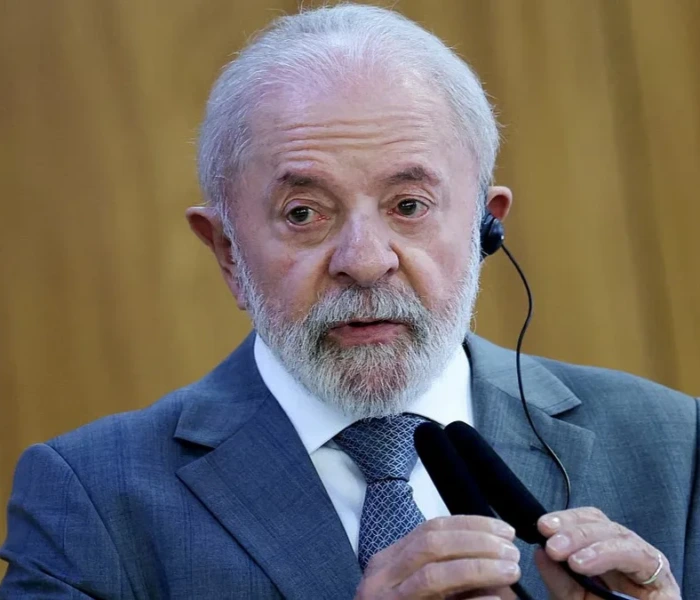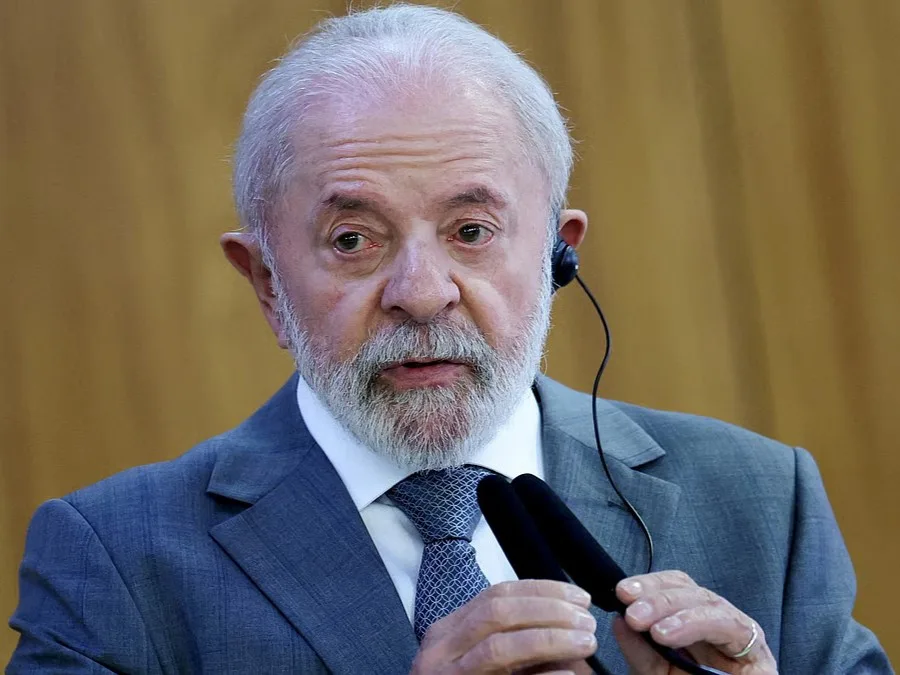
Luiz Inácio Lula da Silva has won Brazil's 2026 presidential election, defeating Senator Flávio Bolsonaro in a closely contested runoff. The victory secures Lula an unprecedented fourth term, although his opponent has challenged the result.
Brazilian President Luiz Inácio Lula da Silva has secured a historic fourth term in office, defeating Senator Flávio Bolsonaro in the country’s presidential runoff.
According to Brazil’s Superior Electoral Court (TSE), Lula received 51.79% of valid votes, securing 64,256,232 ballots against Bolsonaro’s 59,826,041 votes, or 48.21%.
The victory marks an unprecedented fourth presidential term for the 80-year-old leader of the Workers’ Party (PT), who previously governed Brazil from 2003 to 2010 before returning to office in 2023.
However, the election has been followed by political uncertainty after Bolsonaro refused to concede and announced plans to challenge the result.
A Historic Electoral Comeback
Lula’s victory is particularly significant because he entered the runoff after finishing behind Bolsonaro in the first round.
Bolsonaro, the eldest son of former President Jair Bolsonaro, secured 47.03% of valid votes in the opening round, compared with Lula’s 45.16%.
The result was reversed in the second round, with Lula winning by more than 4.4 million votes.
It is the first time since Brazil restored direct presidential elections in 1989 that a candidate who finished second in the opening round has gone on to win the presidency.
The outcome also extends Lula’s political career, which began in the trade union movement during the 1970s.
A former metalworker, Lula helped establish the Workers’ Party in 1980 and became one of the most influential political figures in modern Brazilian history.
His latest victory follows a campaign shaped by public concerns over inflation, crime, corruption and the cost of living.
Flávio Bolsonaro Challenges Election Result
Despite the official declaration of Lula’s victory, Flávio Bolsonaro has refused to accept the outcome.
The senator announced that his legal team would seek annulment of the election, questioning a decision to extend voting hours by two hours at certain polling stations.
The extension was authorised by Supreme Federal Court Justice Cristiano Zanin following transportation difficulties and severe weather that affected access to polling locations.
Both presidential campaigns had raised concerns about voting access during election day.
Bolsonaro has argued that the decision altered the electoral process, although no evidence has been established that the extension changed the national result.
Brazil’s electoral authorities have formally declared Lula the winner.
Lula Pledges Broader Public Participation
Following his victory, Lula emphasised national sovereignty and the importance of democratic participation.
In remarks shared on social media, he declared, “Brazil is no one’s backyard,” while promising to expand public involvement in government decision-making.
The president also highlighted the role of voter mobilisation in securing his reelection.
His campaign gained momentum during the runoff through social media activity, public demonstrations and grassroots political organising.
According to Brazilian reporting, supporters used digital networks and messaging platforms to encourage voter participation, helping Lula overcome his first-round deficit.
The campaign’s final stages demonstrated the continuing importance of voter mobilisation in a closely divided political environment.
Economic Challenges Await Lula’s Fourth Term
Lula’s next administration will face considerable economic and political pressures.
Brazil continues to confront concerns over the cost of living, high interest rates, public debt and household borrowing.
The president campaigned on strengthening social welfare, protecting workers and reducing poverty.
However, implementing these priorities may prove difficult in a Congress where conservative parties retain considerable influence.
His government will also face pressure to balance public spending commitments with fiscal stability and economic growth.
The election result initially unsettled financial markets, where some investors had anticipated a Bolsonaro victory.
For Lula, the challenge will be translating his electoral comeback into effective governance while addressing the concerns of voters who supported his opponent.
Implications for Brazil’s Global Position
The election carries significance beyond Brazil’s domestic political landscape.
As Latin America’s largest economy, Brazil plays an important role in regional diplomacy, international trade and discussions surrounding climate policy.
Lula has consistently advocated a more independent foreign policy, strengthening relationships with developing economies and promoting cooperation through international forums.
His administration has also sought closer engagement with China and countries across the Global South.
His reelection is expected to preserve that diplomatic direction, even as Brazil navigates differences with the United States under President Donald Trump.
The outcome also contrasts with recent electoral gains by conservative political movements elsewhere in Latin America.
A Defining Moment in Lula’s Political Career
Lula’s fourth presidential victory adds another chapter to a political career spanning more than four decades.
From his beginnings as a factory worker and union organiser to his leadership of Brazil’s largest political party, his career has been marked by electoral success, political controversy and repeated returns to national leadership.
His previous terms included major social programmes aimed at reducing poverty, while his political career was also affected by corruption convictions that were subsequently annulled.
The 2026 result places him on course to complete 16 years as Brazil’s president, the longest period of service by a leader since the country’s return to democracy.
Yet the closely divided election underscores the challenges ahead.
With Bolsonaro contesting the outcome and significant economic pressures facing the country, Lula’s fourth term will be judged not only by the scale of his political comeback but also by his ability to govern a deeply divided nation.
Sources: Brazil’s Superior Electoral Court (TSE); Agência Brasil; Reuters; Rediff/ANI