


Thought Leadership

Written by Vasudevan Kidambi, Managing Director, Navo Management Consultants
The ‘greenback’ or the U.S. dollar has been synonymous with global trade and finance for years. From its monopoly over benchmark oil prices to its pervasive status as the world’s reserve currency, its near-imperial hegemony is evident in dozens of ways. There is, however, a noticeable change in the air as geopolitical realities shift and countries redefine their economic plans. The global financial landscape is being reshaped as countries, motivated by financial sovereignty hopes and strategic needs, forge more bilateral agreements to avoid the U.S. dollar in trade settlements. This is not just a financial maneuver; it’s an expression of a changing world, adjusting to the new rules and in quest of diversified economic dependencies. Nations such as India, China, Russia, Sri Lanka, Saudi Arabia, Iran, Venezuela, Turkey, Malaysia, Brazil, Argentina, Bangladesh, and the United Arab Emirates are leading this change, exploring alternative trade arrangements that could redefine global trade dynamics, influence currency markets, and reshape the broader international financial paradigm.
What is de-dollarization?
De-dollarization is a process of substantially decreasing the US dollar’s presence in worldwide trade and finance. The result is a reduction of the dollar’s demand on national, institutional, and corporate levels. The reduction of the role and influence of the dollarized global capital market would be weakened. Two scenarios could erode the dollar’s status: adverse events that undermine the perceived safety and stability of the dollar and positive developments outside the US that boost the credibility of alternative currencies.
How does de-dollarization impact the global economy?
De-dollarization would shift the balance of power among countries, reshaping the global economy and markets. Most affected would be the US, where de-dollarization implies a large relative fall in US financial asset prices vs the rest of the world. This would trigger a withdrawal or redeployment from US markets, eroding trust. The impact of de-dollarization on US growth is still unclear, but a chronically weak dollar could enhance US competitiveness, even as it lowers foreign investment in the US economy.
De-dollarization in currency and oil markets:
The dollar still serves as the world’s dominant reserve currency and is broadly employed for trade and international transactions. However, its dominance is being challenged, especially due to geopolitical shifts like the Russia-Ukraine crisis. Some signs of de-dollarization are evident in currency markets, with the dollar’s share in FX reserves declining to a record low of 58%.
In oil markets, more sales are now being transacted in non-dollar currencies; nevertheless, its position is up in there and has been challenged particularly by something such as, for example, the Russia-Ukraine catastrophe.
Is de-dollarization imminent?
While some level of de-dollarization is expected, a rapid shift away from the dollar is not anticipated. The US has a long-standing global network of alliances and partnerships, which will likely prevent a swift transition away from the dollar. However, partial de-dollarization, especially among non-aligned countries and China’s trading partners, is more plausible.
Could the UAE benefit from de-dollarization?
UAE has always been at the forefront of development in the region. Its dynamic re-positioning every time the world undergoes a churn stands testimony to its swift adaptability and resilience. With respect to the new global phenomenon, viz., de-dollarization, the UAE stands to gain significantly through enhanced economic stability, diversified trade relations, and reduced currency risks.
By transacting in alternative currencies like the Chinese Yuan or the Indian Rupee, among others, the UAE can secure better deals and more consistent pricing on international purchases.
As the nation actively experiments with Central Bank Digital Currencies (CBDCs), providing a viable alternative to the U.S. dollar for transactions and settlements and fostering financial innovation and digital transactions, it also insulates itself from the economic policies and financial stability of the U.S. This helps the UAE in exerting greater control over its economic environment.
Engaging in trade with nations that are also distancing themselves from the U.S. dollar further strengthens the UAE’s economic ties and positions it advantageously in the shifting global economic landscape. Through these deliberate and measured steps, the UAE is not only navigating but also capitalizing on the opportunities presented by the global trend of de-dollarization.
How corporates should prepare themselves
With the unfolding of a growing de-dollarization process, the importance of CEO and CFO roles in companies is skyrocketing. Here are the strategic captains leading their businesses through the complex currents of global financial change. Amidst the broader recasting of the economic landscape, it will be up to CEOs and CFOs to proactively lead and capitalize on the resulting upside. Here are the critical steps they must take to ensure resilience and sustainability in this new paradigm.
CEOs should ensure that their business operations, investments, and partnerships are diversified across various regions and not solely dependent on dollar-dominated markets. This reduces the risk associated with any single currency’s volatility.
Strengthen Alternative Partnerships:
Building strong relationships with partners in emerging markets can provide alternative avenues for trade and investment, reducing dependency on dollar-based transactions.
Continuous Monitoring of Global Economic Trends:
CEOs should stay informed about global economic shifts, currency trends, and geopolitical events that might influence the de-dollarization process.
Invest in Financial Education:
Ensure that the organization’s leadership and decision-makers are educated about the implications of de-dollarization and are prepared to make informed decisions.
Adopt Flexible Business Models:
Businesses should be agile enough to adapt to changing financial landscapes, whether it’s shifting to new markets or adopting new transaction methods.
Diversify Currency Reserves:
Instead of holding most reserves in dollars, CFOs should consider diversifying into other stable currencies or assets to hedge against potential dollar depreciation.
Re-evaluate Investment Portfolios:
Regularly review and adjust the company’s investment portfolios to ensure they are not overly exposed to dollar-dominated assets.
Implement Multi-currency Accounting Systems:
Adopt accounting systems that can handle multiple currencies seamlessly, allowing for easier transactions and financial reporting in various currencies.
Risk Management and Hedging Strategies:
Develop strategies to hedge against currency risks, especially if the organization has significant transactions in dollars. This might include forward contracts, options, or other financial instruments.
Engage in Regular Financial Scenario Planning:
CFOs should conduct regular financial scenario planning exercises to anticipate the potential impacts of de-dollarization on the organization’s financial health and be prepared with mitigation strategies.
By proactively addressing the challenges and opportunities presented by de-dollarization, CEOs, and CFOs can position their organizations for resilience and continued success in a changing global financial landscape.
More actions beyond the Greenback
Brazil’s Push for Regional Currency: Brazil’s Push for Regional Currency: Brazil’s President, Luiz Inácio Lula da Silva, has called for a new common currency to trade in South America. This, if implemented, would help decrease the region’s dependence on the dollar for transactions.
Saudi Arabia, Iran, and the UAE: The Middle East which has been a bastion of dollar dominance due to its oil-driven economies, but there have been discussions and treaties in recent years that point to a slow phase-out. From oil trading to other businesses, they are exploring options — often with the help of major Asian economies.
EU’s Deforestation Law: The Middle East which has been a bastion of dollar dominance due to its oil-driven economies, but there have been discussions and treaties in recent years that point to a slow phase-out. From oil trading to other businesses, they are exploring options — often with the help of major Asian economies.
Global Reserves Movement: By the end of 2022Q3, the dollar’s share of global foreign exchange reserves fell just below 60%, versus more than 70% in 1999. China, the biggest foreign US debt holder, reduced its dollar holdings as its relations with the US worsened.
Turkey: Turkey has been working on alternatives to the dollar in trade, especially with countries such as Russia and China. They have also utilized their national Turkish lira currency in intra-trade with the neighboring countries.
Venezuela: In response to sanctions, Venezuela has attempted to conduct trade in currencies other than the USD, including the euro and Chinese yuan.
RBI has allowed banks from 18 countries to trade in rupee: Botswana, Fiji, Germany, Guyana, Israel, Kenya, Malaysia, Mauritius, Myanmar, New Zealand, Oman, Russia, Seychelles, Singapore, Sri Lanka, Tanzania, Uganda, and the United Kingdom
So, in today’s evolving global Financial Ecosystem the role of CEOs and CFOs in organizations becomes paramount. As the tectonic plates of economic power slowly move to create a new age, these leaders must have the vision, proactivity, and adaptability that make it feel like they are the ones behind it. CEOs need to lead their organizations with strategic anticipation for changes in order to build resilience and competitiveness. On the other hand, CFOs, in these economic circumstances, need to maximize resources, allocate assets wisely, and hedge against the risks of currency fluctuations and changing global trade equations. Their collective leadership will be crucial in navigating the future complexities, equipping their organizations to thrive in a world where the old trade and finance dictums have been rewritten.
About the Author:
Vasudevan Kidambi, a visionary leader and strategist, heads Navo Informatica Pvt. Ltd spearheading a paradigm shift in AI-enabled communication. As Director of Business Transformation at Zenesis Corp, he leads the practice with AI-driven content, image, and video communication. The company wields AI to optimize communication strategies, engage customers, and spur growth. With an illustrious career spanning three decades, Vasudevan embodies a fusion of innovation and transformation. He is also the author of Amazon’s #1 Bestseller book – One Page Communicator.

Written by contributing writer, Jenni Miller The 21st century has witnessed an unprecedented transformation in the way organizations operate. The shift from traditional hierarchical, top-down...


Written by contributing writers Amol Maheshwari and Shweta Jhajharia You’ve probably heard the famous quote by Abraham Lincoln: “Give me six hours to chop down a tree, and I will spend the first four...
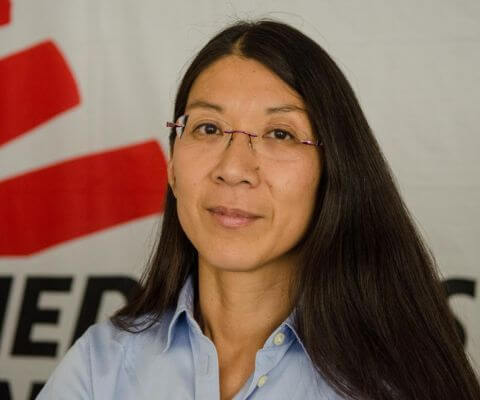
Our features editor, Sherlyn, had the opportunity to sit down with Dr. Joanne Liu, a seasoned professional in the field of global health. Serving as the International President of Médecins Sans...

Written by contributing writer Judith Germain As the summer months draw to a close and the last quarter of 2023 is upon us, returning to work after a relaxed summer holiday can be just what someone...

Written by contributing writer Micah Solomon, Customer Service Consultant, Trainer, and Bestselling Author When my ConsultantPhone rings (it’s like the Batphone but notably less exciting), and...

The string theory is a fascinating concept in physics that aims to explain the fundamental nature of matter and energy in the universe. It suggests that all particles in the universe are composed of tiny,...

Cityscape Global is renowned as the largest real estate exhibition globally. It welcomed 350 exhibitors, over 10,000 international investors, an impressive lineup of more than 300 speakers, and an...

Written By Contributing Writers Jennifer L. Martin, ESQ., Valeria Oman, ESQ., and Melissa Bauman Ward, ESQ. There’s been a lot of buzz about bias lately, most of it negative. Wehe supposed to...

It goes without saying that the pandemic had a tremendous impact on the travel industry, with group travel hit harder than almost any other segment. Fortunately, the sector is recovering from this...