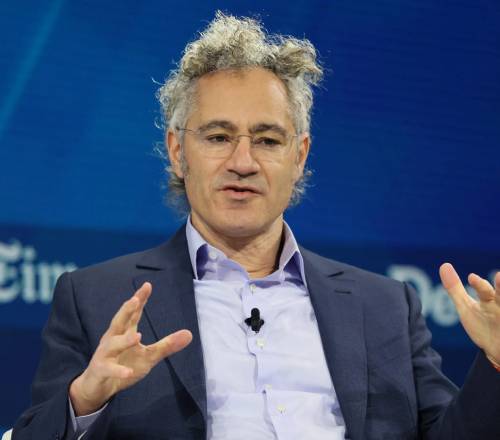
Palantir Technologies CEO Alex Karp shared his perspective on the current state of the artificial intelligence sector during a recent appearance on CNBC’s Squawk Box. In the interview, Karp criticized the pricing structures used by major AI developers, comparing the high fees paid by corporate clients to a “wealth tax” on businesses.
Karp highlighted what he described as a growing frustration among corporate leaders regarding the actual financial returns of generative AI tools. He noted that many companies are paying substantial amounts for AI services based on how much data they consume, while simultaneously running the risk of allowing outside AI labs to use their private business data to train foundational models.
Highlighting the current economic dynamic between tech providers and corporate buyers, Karp remarked, “The people who get fabulously wealthy are not the people using the tools; they are the people who sell the tools.”
The Palantir executive also questioned the widespread reliance of businesses and government bodies on a small group of tech providers that use closed systems. He suggested that outsourcing critical operations and private business data to external firms can create long-term risks regarding who retains ultimate control over the computing power, data, and software code.
These comments align with Palantir’s recent business focus on data control and security. Shortly before the interview, Palantir introduced a partnership with Nvidia aimed at helping corporate clients and government entities run custom AI models in secure, private environments. Karp emphasized that organizations should keep full ownership of their data and computer systems rather than relying entirely on outside cloud providers.
For corporate managers, Karp’s observations point to a shift in how companies approach AI adoption. As initial excitement turns into practical implementation, businesses are examining costs, data privacy, and actual productivity improvements more closely. Tech leaders are increasingly evaluating whether their budgets are directly driving internal growth or mostly funding the research and development of external tech suppliers.
Sources: CNBC, SiliconANGLE, Tiger Brokers, Digital Applied, Palantir