Recent reports suggest that work on The Line has been temporarily paused. Predictably, some have rushed to declare the project a failure, calling it “the end of The Line.” I think that misses the point entirely.
The greatest value of The Line was never the steel, concrete, or glass. Its greatest contribution was forcing the world to think differently about cities.
For centuries, humanity has largely repeated the same urban model. Cities expanded outward. Roads multiplied. Congestion followed. Infrastructure chased development while development chased infrastructure. The result was often predictable: longer commutes, greater resource consumption, social fragmentation, and expanding environmental footprints.
Then Saudi Arabia asked a different question. What if we started over? What if a city could be designed from first principles rather than inherited from centuries of historical compromise? That question alone deserves recognition.
The Kingdom has repeatedly demonstrated a willingness to pursue ideas at a scale few nations would even contemplate. Whether in energy, logistics, tourism, technology, or urban development, Saudi Arabia has shown a remarkable capacity to imagine futures that others consider unrealistic. The Line became the embodiment of that spirit. Whether it is ultimately built exactly as originally envisioned is almost secondary. The real achievement was daring to imagine something radically different and committing to the pursuit of it.
Yet while admiring the vision, I often found myself wondering whether the future city it imagined might have benefited from a different geometry.
Not a line but ‘A Loop’.
Not because The Line was wrong, but because circles have quietly shaped some of humanity’s most successful systems for thousands of years.
Nature prefers cycles. Water circulates. Seasons return. Nutrients move through ecosystems. Blood flows continuously through the body. The planets travel in repeating paths through space. Across technology, sustainability, economics, and nature itself, circular systems repeatedly demonstrate resilience because they allow movement, renewal, adaptation, and balance.
Perhaps future cities should learn from the same principle. Imagine a city organized around a series of concentric rings rising from the Saudi desert. At its centre lies a vast oasis, not simply a park, but the symbolic and physical heart of the city. Gardens, lakes, museums, mosques, public squares, cultural venues, shaded promenades, and gathering spaces create a civic centre that belongs to everyone. It becomes the city’s shared living room.
Around this central oasis sit walkable residential communities designed for people rather than vehicles. Schools, clinics, playgrounds, parks, and daily services are integrated directly into neighbourhood life. Families can reach essential services within minutes. Children can safely walk to school. Public spaces encourage interaction rather than isolation.
Beyond these residential districts, different sectors develop their own identities. One becomes known for education and research. Another for technology and innovation. Another for finance and commerce. Another for arts, culture, hospitality, and recreation. Rather than creating one enormous urban mass, the city evolves into a collection of interconnected communities, each contributing something distinct while remaining part of a larger whole.
A defining feature could be a navigable marina ring located roughly halfway between the city centre and its perimeter. More than a decorative water feature, this circular waterway becomes an active part of urban life. Marinas, waterfront residences, yacht clubs, restaurants, hotels, promenades, and public parks line its shores. Water taxis and pleasure craft move continuously around the city, creating a unique recreational and transportation network while helping moderate the desert microclimate.
Beyond the marina ring, the skyline gradually rises. High-density commercial districts, corporate headquarters, residential towers, hotels, and mixed-use developments cluster along the outer rings. The tallest buildings sit where they create the greatest economic and transportation value, while the inner districts remain human-scaled and community-focused.
The outermost sectors accommodate airports, logistics hubs, advanced manufacturing, renewable energy facilities, transportation gateways, and supporting infrastructure. In many ways, the city functions like a living organism. The most people-focused activities remain close to the heart while heavier industrial functions operate near the perimeter. Everything is connected. Everything is accessible. Everything serves a purpose within the larger system.
Unlike conventional cities, however, this structure would not be confined to a single horizontal plane. Above ground, residents experience beauty, nature, architecture, recreation, and public life. Parks replace parking lots. Trees replace highways. Public spaces replace service roads. Beneath the surface, an entirely different city operates continuously and largely unseen. High-speed metro systems, autonomous freight networks, utility corridors, energy infrastructure, water systems, maintenance tunnels, waste processing facilities, and emergency response routes function below ground, allowing the visible city to remain focused on people rather than machines. Technology remains largely invisible while continuously enabling daily life. Technology should support the human experience, not dominate it.
The transportation advantages of a looped city are significant. In a conventional linear or grid-based city, destinations become increasingly separated as development expands. Travel distances grow. Infrastructure becomes stretched. Congestion becomes a recurring challenge.
A loop behaves differently. Movement becomes bi-directional. If a destination is far in one direction, it is often considerably closer in the other. Travel paths shorten. Transportation networks gain redundancy. Emergency response routes multiply. Congestion can be distributed rather than concentrated.
The city effectively folds distance back upon itself. An underground transit network could consist of three concentric rail systems: an inner neighbourhood tram, a middle-ring metro connecting major districts, and a high-speed outer express linking key destinations across the city. Combined with radial connectors, most journeys could be completed within fifteen to twenty minutes regardless of where a resident lives.
Yet the most compelling advantage might not be transportation or even sustainability. It might be behaviour. Many sustainability initiatives focus on persuading people to make better choices. Drive less. Walk more. Use less energy. Consume fewer resources. The problem is that behaviour change is difficult. People generally choose the option that is easiest, fastest, safest, and most convenient.
The most successful systems therefore do not force sustainable behaviour. They make it the default behaviour. Infrastructure shapes behaviour.
If schools, workplaces, healthcare facilities, recreation, shopping, and public services are located within easy reach of every resident, people naturally become less dependent on private vehicles. Not because they are required to, but because there is little reason not to. If public spaces are attractive, safe, shaded, and active, people naturally spend more time outdoors and engage more frequently with their communities. If logistics, freight, waste management, and utility systems operate beneath the city, daily life above ground becomes quieter, safer, cleaner, and more enjoyable. In this sense, sustainability becomes less about environmental policy and more about human-centred design. The city quietly guides behaviour toward more efficient outcomes.
The same principle applies operationally. Most modern cities are collections of separate systems that evolved independently over decades or centuries. Transportation, utilities, housing, communications, waste management, emergency response, and commercial development are often planned separately and integrated later.
A purpose-built Loop City offers something different. Transportation supports land-use planning. Utilities support transportation. Energy systems support water systems. Waste streams become resource streams. Digital platforms support them all. The result is not simply a more sustainable city. It is a more efficient city. Resources travel shorter distances. Infrastructure serves more people with fewer assets. Maintenance becomes more predictable. Emergency response becomes faster. Operating costs decrease while service quality improves. The city begins to function less like a collection of disconnected projects and more like a living system. Scale, of course, remains one of the most important questions.
How large should a future city actually be? Rather than beginning with a vision of several million residents from day one, a looped city could be delivered in stages. An initial development approximately twenty-five kilometres in diameter could comfortably house between 1.5 and 2 million residents. Large enough to support world-class universities, hospitals, cultural institutions, technology districts, financial centres, and transportation infrastructure, yet compact enough to maintain connectivity and a strong sense of place. The real advantage lies in growth.
Unlike conventional cities that sprawl endlessly outward, a looped city already contains its expansion strategy. As population grows, additional concentric rings can simply be added. New residential districts. New commercial centres. New industrial sectors. New transit corridors. The city grows much like the rings of a tree. Each layer strengthens the whole.
A mature Loop City could comfortably support five to eight million residents while preserving the same urban logic that existed on the day it opened. The city would not grow longer. It would grow richer, deeper, and more connected.
Perhaps the most dramatic aspect of the concept would be its relationship with the surrounding landscape. Rather than flattening nature to accommodate development, portions of the outer ring could deliberately integrate existing mountain formations. Imagine a significant section of the city flowing seamlessly into the foothills of a mountain range. Residential districts, commercial sectors, and transportation infrastructure blending naturally into the terrain. A visitor centre, café, observation deck, hiking trails, and cable car connecting the mountainside to the city below.
The mountain becomes part of the city, the city becomes part of the mountain. This reflects a broader philosophy that may prove increasingly important in the future.
Successful urban development should not seek to conquer nature. It should seek to collaborate with it.
Of course, this discussion is not a criticism of The Line. Quite the opposite. Without The Line, many of these conversations might never have occurred. The project challenged assumptions, expanded possibilities, and forced urban planners, engineers, architects, economists, and futurists to reconsider what a city could become. That alone makes it one of the most influential urban concepts of our time.
The first version of the future rarely becomes the final version. That is true of aircraft, computers, transportation systems, and cities themselves. Innovation is rarely a straight line. It is a continuous process of experimentation, learning, adaptation, and refinement.
Perhaps one day Saudi Arabia, or another nation inspired by its example, will revisit these questions. Perhaps the future city will remain a line. Perhaps it will become a loop. Perhaps it will combine elements of both.
Whatever shape ultimately emerges, the real achievement remains unchanged. Someone dared to imagine it. Someone dared to ask a better question. And that is how civilizations move forward.
Not in straight lines, but through continuous cycles of vision, learning, renewal, and progress. Tomorrow is another day. New ideas will emerge. New technologies will appear. New ambitions will take shape.
The future, much like the circulatory systems that sustain life itself, belongs not merely to movement, but to flow.
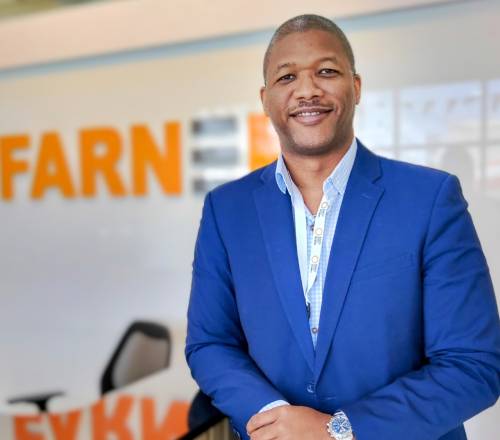
(Ryan Mitchell, LLM, MBA, PMP, CIWFM is the Director of Quality, Health, Safety, Environment & Worker Welfare (QHSEW) at Farnek Services LLC. He is a seasoned leader specializing in enterprise risk management, health & safety, operational excellence, workplace culture and worker welfare. The views expressed in this column are solely his own and do not represent the editorial position of Global Leaders Today.)