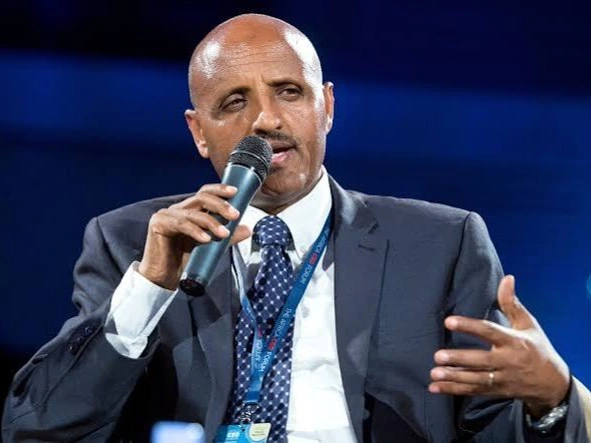
Air India CEO-designate Tewolde Gebremariam has put safety, reliability and sustainable profitability at the centre of his leadership agenda, while calling for stronger frontline decision-making, cost discipline and measured growth.
Incoming Air India chief Tewolde Gebremariam is beginning to put his leadership philosophy into action, setting out a combination of safety, operational reliability, profitability and disciplined growth as the priorities for the airline’s next chapter.
Speaking at his first company-wide town hall, Gebremariam told employees that Air India has made substantial progress since returning to the Tata Group, but that its transformation is far from complete.
His message puts execution at the centre of what comes next.
Gebremariam, who was appointed CEO and Managing Director in August and will formally assume the position following the necessary regulatory approvals, is succeeding Campbell Wilson. He arrives with more than three decades of aviation experience, including over a decade leading Ethiopian Airlines.
Safety Comes First
Safety sits at the top of Gebremariam’s agenda.
He has called for a stronger reporting culture in which employees are encouraged to raise concerns, alongside a greater organisational focus on operational reliability.
Not every disruption can be prevented, weather and technical problems will remain part of aviation; but Gebremariam believes Air India can become better at minimising disruption and recovering when problems occur.
That extends to how decisions are made.
One notable element of his approach is greater empowerment for frontline employees, allowing people closest to customers and operations to make faster decisions when disruptions occur.
For a large airline, that represents an important leadership challenge: creating accountability without slowing employees through unnecessary layers of approval.
Profitability Becomes an Organisation-Wide Goal
Gebremariam is also placing financial performance firmly alongside operational improvement.
Air India needs to improve both revenue and costs, he told employees, with opportunities being examined across its international network, commercial operations and cargo business.
Cost discipline, however, will not be treated solely as a finance department responsibility.
The airline plans to introduce programmes that recognise employee ideas capable of generating measurable savings and operational efficiencies, effectively asking its workforce to participate directly in improving financial performance.
Growth, But Not Growth at Any Cost
Gebremariam is not signalling a retreat from expansion.
Instead, he is drawing a distinction between growth and sustainable growth.
Air India will continue examining network efficiency, fleet deployment and opportunities to rebalance operations. But expansion will need to be supported by sufficient readiness across its people, aircraft and network.
The strategy reflects the experience Gebremariam brings to the role. During his tenure leading Ethiopian Airlines, revenue increased more than fourfold and its fleet nearly tripled as the carrier developed Addis Ababa into a major international aviation hub.
Air India presents a different challenge, but also a significantly larger potential opportunity.
India’s economic growth, demographics, geographic position and sizeable global diaspora give the carrier a substantial foundation for international expansion. At the same time, it faces external pressures including airspace restrictions, elevated fuel costs and uncertainty across important international markets.
Gebremariam’s first priorities consequently reveal a leadership agenda built less around announcing another transformation and more around making the existing transformation work.
Safety first. Reliability alongside it. Financial discipline underneath both. And growth only when the organisation is ready to support it.
Sources: Air India; Tewolde Gebremariam employee town hall; Business Standard; Moneycontrol; The Indian Express