Few institutions shape the global economy quite like the United States Federal Reserve. Its decisions on interest rates ripple across markets from New York to Nairobi, influencing everything from mortgage rates to foreign exchange. As Jerome Powell prepares to step down as Fed Chair in May 2026, the spotlight has turned to his successor, Kevin Warsh, a financier and former central banker with a career built at the intersection of Wall Street, Washington, and academia.
From Albany to the Apex of Global Finance
Warsh earned his undergraduate degree in public policy from Stanford University in 1992, followed by a law degree from Harvard Law School in 1995. He further deepened his economic grounding through advanced coursework at MIT’s Sloan School of Management and Harvard Business School.
He then headed to Wall Street, where at Morgan Stanley he advised corporate clients across multiple sectors on mergers and acquisitions, building the kind of hands-on market experience that would later define his approach to central banking. In 2002, he moved into public service, taking up a senior economic advisory role in the Bush White House, where he coordinated policy across banking, securities, and capital markets.
A Crisis-Era Central Banker
In 2006, President Bush appointed Warsh to the Fed’s Board of Governors, at 35, he was the youngest person ever to hold that position. The timing proved consequential. During the 2008 global financial crisis, Warsh was at the centre of the Fed’s emergency response, working alongside then-Chair Ben Bernanke on interventions involving some of the biggest names on Wall Street. His years in investment banking gave him an on-the-ground understanding of how markets were behaving under extreme stress, a perspective that proved invaluable inside the Fed’s deliberation rooms.
He resigned from the Fed in March 2011, well before his term was due to expire, having grown increasingly concerned about the long-term risks of quantitative easing and an ever-expanding central bank balance sheet, convictions he has only strengthened since.
What His Appointment Means
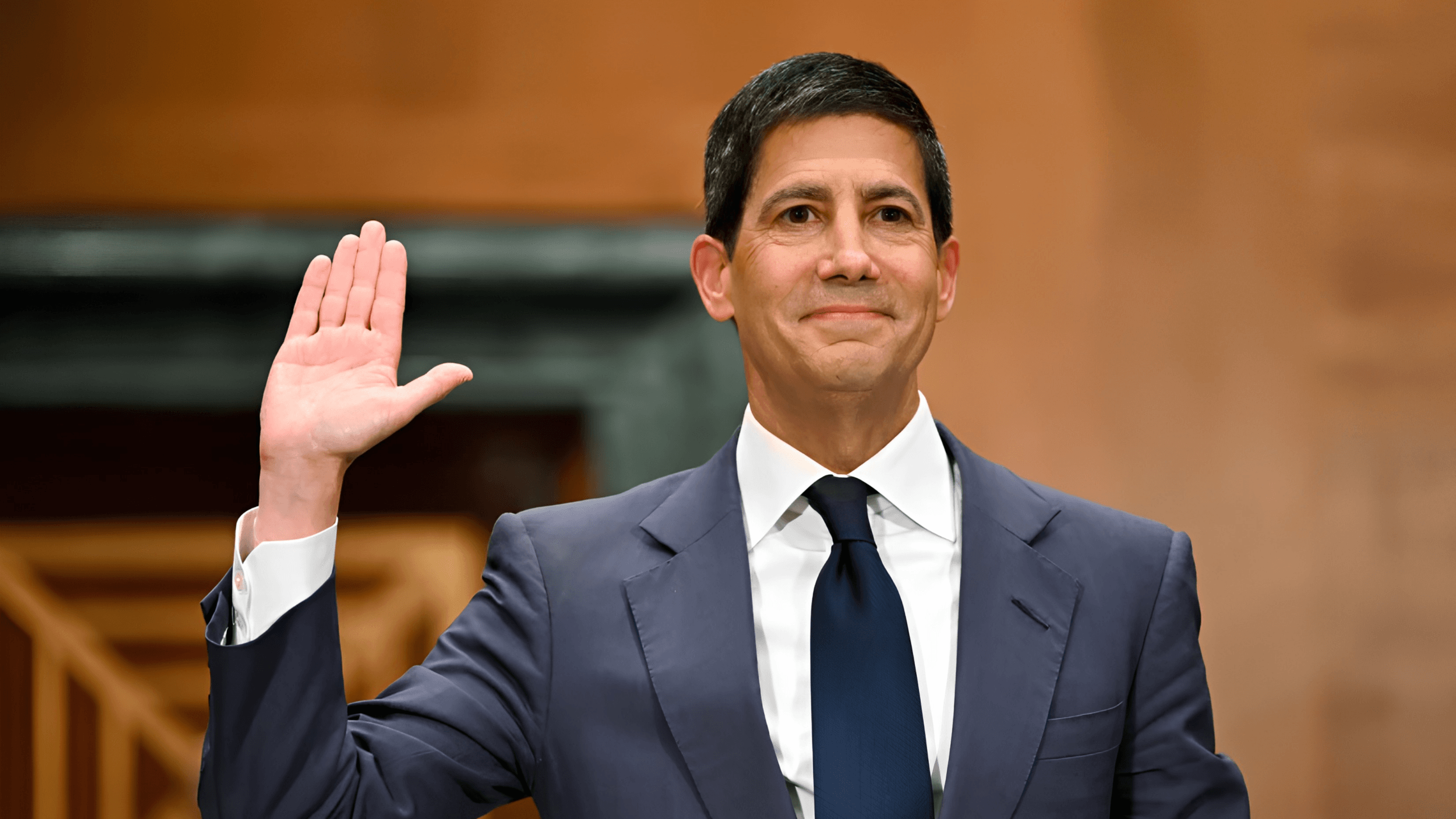
The Senate Banking Committee approved Warsh’s nomination on April 29, 2026, sending it forward to the full Senate ahead of Powell’s May 15 term expiry. If confirmed, he will inherit stewardship of the world’s most influential central bank at a period of considerable economic uncertainty. Warsh has long argued that tackling inflation requires looking beyond just interest rate adjustments. In his view, the Fed’s significant holdings in long-term government bonds and mortgage-backed securities are just as central to the inflation story, and just as much in need of scrutiny.
At his confirmation hearing, Warsh was categorical that the President had never sought a commitment from him on interest rate policy, and that even if he had, Warsh would not have agreed to it. His track record, spanning Wall Street, the White House, and the Fed itself, suggests a leader who sees monetary policy through both a practitioner’s lens and a long-term institutional one.
For global business leaders and investors alike, Warsh’s ascent to the chairmanship marks a significant shift in the character of American central banking, one worth watching closely.
____________________________________________________________________________________________________________________________________
Sources:
1. Biyografiler – Biography, Kevin Warsh
2. Al Jazeera – Senate panel advances Kevin Warsh’s nomination for US Fed chair
3. The Hill – America cannot afford to wait for a new Fed chair — confirm Kevin Warsh now
4. CNN Business – Warsh says he won’t do Trump’s bidding